


Polyelectrolyte Coated Nanoparticle SPION: Uses and Benefits
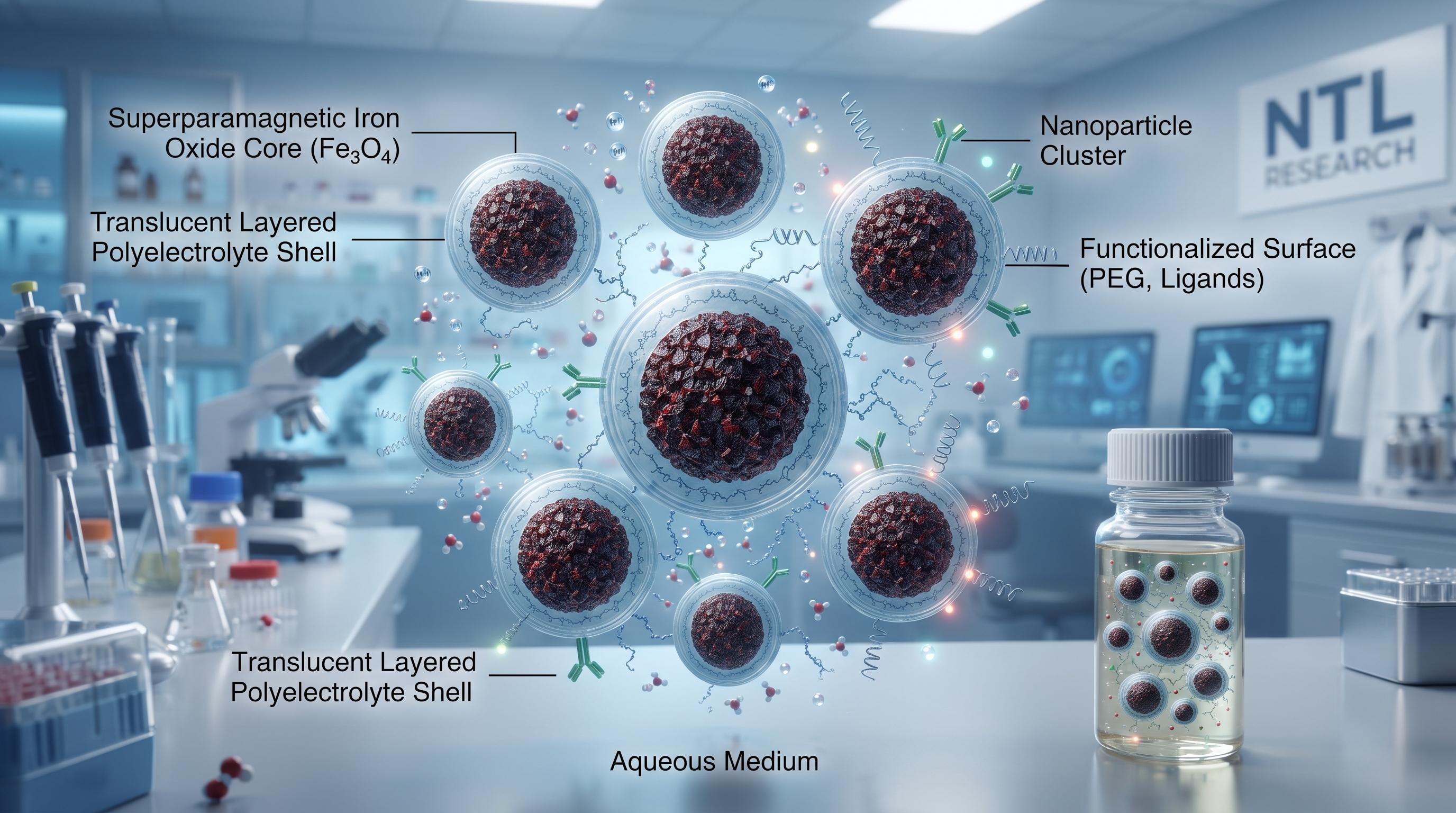
Polyelectrolyte coated nanoparticle SPION is an advanced nanomaterial concept that combines superparamagnetic iron oxide nanoparticles with a protective and functional polyelectrolyte coating. SPIONs are widely studied because of their magnetic properties, small size, surface activity, and potential use in biomedical and technological applications. Adding a polyelectrolyte coating can change the surface characteristics of these nanoparticles and improve their stability, dispersibility, and interaction with surrounding materials. This makes polyelectrolyte coated SPIONs an important subject in nanotechnology, materials science, biotechnology, diagnostics, drug delivery research, magnetic separation, and other specialized fields.
What Is a Polyelectrolyte Coated Nanoparticle SPION?
A polyelectrolyte coated nanoparticle SPION is a superparamagnetic iron oxide nanoparticle surrounded by a layer of polymer containing ionizable or charged groups. The underlying SPION provides magnetic behavior, while the polyelectrolyte coating modifies the surface of the nanoparticle. This combination can provide properties that are difficult to obtain from an uncoated magnetic nanoparticle alone. The coating may help reduce particle aggregation, improve dispersion in suitable liquids, provide additional surface functionality, and influence how the nanoparticle interacts with biological or chemical environments. The final characteristics depend on the iron oxide core, coating material, coating thickness, surface charge, preparation method, and intended application.
What Are SPIONs?
SPION stands for superparamagnetic iron oxide nanoparticle. These nanoparticles are commonly based on iron oxide materials and are studied because they can respond strongly to an external magnetic field while showing very limited magnetic behavior when the external field is removed under suitable nanoscale conditions. This behavior makes SPIONs particularly interesting for applications where magnetic control or separation is required. Their small size also provides a relatively large surface area, allowing researchers to modify the nanoparticle surface with polymers, ligands, biomolecules, or other functional materials.
Why Coat SPIONs With Polyelectrolytes?
Polyelectrolyte coatings are used to modify the surface of nanoparticles and influence their behavior in different environments. Bare magnetic nanoparticles can have a strong tendency to aggregate because of magnetic attraction and surface interactions. A suitable polyelectrolyte layer can provide electrostatic or steric effects that help maintain better dispersion. The coating can also introduce functional groups that make it easier to attach other molecules to the nanoparticle surface. This surface modification can be especially useful when SPIONs are being developed for biological research, chemical sensing, separation processes, or other applications where controlled surface interactions are important.
Surface Properties of Polyelectrolyte Coated SPIONs
The surface of a polyelectrolyte coated SPION is different from that of an uncoated magnetic nanoparticle because the polymer layer introduces new chemical and physical characteristics. Depending on the selected polyelectrolyte, the surface may carry positive, negative, or environmentally responsive charges. Surface charge can influence colloidal stability and interaction with other particles or molecules. The coating may also provide functional groups that can be used for further modification. Factors such as coating density, molecular structure, solution conditions, and nanoparticle concentration can influence the final surface behavior.
Stability of Polyelectrolyte Coated Nanoparticles
Stability is one of the major reasons researchers investigate polyelectrolyte coatings for SPIONs. Nanoparticles can aggregate when attractive forces overcome the mechanisms keeping them dispersed. A polymer coating can help reduce direct particle-to-particle contact and may provide electrostatic or steric stabilization. However, stability is not guaranteed under every condition. Changes in pH, ionic strength, temperature, solvent composition, or other environmental factors can influence polymer conformation and surface interactions. Therefore, the stability of a polyelectrolyte coated SPION should be evaluated under the conditions relevant to its intended use.
Magnetic Properties of Polyelectrolyte Coated SPIONs
The magnetic behavior of a polyelectrolyte coated SPION primarily comes from its iron oxide core. The polymer coating surrounds the magnetic core but does not replace its magnetic function. Depending on the coating thickness and nanoparticle design, the coating can influence how the particles interact with one another without eliminating their useful magnetic response. This allows researchers to combine surface functionality with magnetic manipulation. The particles can potentially be concentrated, separated, or guided using an external magnetic field while the coating provides additional chemical or biological functionality.
Applications in Biomedical Research
Polyelectrolyte coated SPIONs are of interest in biomedical research because their magnetic core and modifiable surface can provide several useful characteristics. Researchers investigate these nanoparticles for areas such as targeted delivery research, magnetic separation, diagnostic technologies, imaging-related studies, biosensing, and other nanomedicine applications. The polymer coating can influence interactions between nanoparticles and biological environments, while the magnetic core provides a mechanism for external magnetic manipulation. However, suitability for a particular biomedical application depends on factors such as particle size, surface chemistry, coating properties, magnetic behavior, biological compatibility, and experimental conditions.
Potential Role in Drug Delivery Research
The combination of magnetic properties and a functional polymer surface makes coated SPIONs interesting for drug delivery research. A suitable coating may provide a surface where therapeutic molecules or other functional compounds can be associated with the nanoparticle. The magnetic core can potentially provide an external means of manipulating the particles under appropriate experimental conditions. Polyelectrolyte layers may also influence loading, release behavior, surface charge, and interactions with surrounding biological materials. Research in this area requires careful evaluation because particle behavior can vary significantly according to the coating chemistry and biological environment.
Use in Magnetic Separation
Magnetic separation is another important application area for SPION-based materials. Because SPIONs respond to magnetic fields, they can potentially be separated from a liquid medium without relying entirely on conventional filtration or centrifugation methods. A polyelectrolyte coating can provide functional groups that interact with selected molecules, cells, ions, or other materials. This combination of magnetic response and surface functionality can make coated SPIONs useful for research involving selective capture and separation. The effectiveness of the process depends on particle design, surface chemistry, magnetic response, target material, and solution conditions.
Polyelectrolyte Coatings and Surface Functionalization
One of the major advantages of a polyelectrolyte coating is the opportunity for surface functionalization. Functional groups within or attached to the polymer layer can provide sites for additional molecules to bind to the nanoparticle. Researchers can use this strategy to alter interactions with specific chemical or biological targets. Surface functionalization may also influence particle dispersibility, recognition behavior, adsorption, and compatibility with particular environments. The exact approach depends on the chemistry of the selected polymer and the intended use of the SPION.
Factors Affecting Particle Stability
Several environmental factors can influence the stability of a polyelectrolyte coated SPION. The acidity or alkalinity of the surrounding solution can change the charge state of ionizable groups within the coating. Salt concentration can affect electrostatic interactions and reduce or modify repulsive forces between particles. Temperature may influence polymer structure and solution behavior, while the composition of the surrounding medium can affect adsorption and surface interactions. Understanding these factors is important when designing coated SPIONs for consistent performance in laboratory or industrial environments.
Preparation of Polyelectrolyte Coated SPIONs
The preparation of polyelectrolyte coated SPIONs generally involves producing or obtaining a suitable magnetic nanoparticle core and then introducing a polymer layer onto its surface. Different coating approaches can be used depending on the type of polyelectrolyte, nanoparticle surface, solvent system, and desired surface characteristics. Researchers may use adsorption-based approaches, electrostatic interactions, layer-by-layer methods, or other surface modification techniques. Careful control of the preparation conditions is important because coating quality can influence particle size, aggregation behavior, surface charge, magnetic properties, and overall performance.
Characterization of Coated SPIONs
Characterization is essential for understanding whether a polyelectrolyte coated nanoparticle SPION has the properties required for a particular application. Researchers may examine particle size, surface charge, magnetic behavior, coating characteristics, morphology, chemical composition, and dispersion stability. Different analytical techniques can provide information about different parts of the nanoparticle system. Characterization helps determine whether the coating has been successfully introduced and whether the resulting material behaves consistently under the intended conditions.
Advantages of Polyelectrolyte Coated SPIONs
Polyelectrolyte coated SPIONs can offer several advantages compared with unmodified magnetic nanoparticles. The polymer layer can improve dispersion under suitable conditions, reduce unwanted aggregation, introduce functional surface groups, and alter interactions with surrounding materials. At the same time, the magnetic core retains its ability to respond to an external magnetic field. This combination gives researchers a flexible platform that can be modified for different applications. The actual benefits depend on the choice of polymer, core material, particle size, coating method, and environmental conditions.
Limitations and Challenges
Despite their potential advantages, polyelectrolyte coated SPIONs also present challenges. A coating that improves stability in one environment may behave differently in another because changes in pH, salt concentration, temperature, or other solution properties can affect polymer interactions. Excessive coating thickness may also influence magnetic responsiveness or increase the overall particle size. Reproducible preparation can be challenging because small differences in synthesis and coating conditions may change the final particle properties. For biomedical applications, additional concerns include biological interactions, toxicity evaluation, long-term stability, and appropriate testing before practical use.
Importance of Surface Charge
Surface charge is an important property of polyelectrolyte coated SPIONs because it can influence particle interactions, dispersion, adsorption, and biological behavior. Positively and negatively charged surfaces can interact differently with other particles, molecules, and biological components. The magnitude and stability of the surface charge can also change with environmental conditions. Researchers therefore consider surface charge when designing coated SPIONs for specific applications. Controlling surface charge through polymer selection and coating conditions can help tailor the nanoparticle system for a desired purpose.
Environmental and Biological Considerations
The behavior of polyelectrolyte coated SPIONs should be evaluated carefully when they are intended for biological or environmental applications. Nanoparticle interactions can differ from those of larger materials because of their small size and high surface area. The coating can influence how the particles interact with proteins, cells, microorganisms, and other materials. Environmental conditions can also affect their aggregation, transport, and stability. Responsible development therefore requires appropriate characterization and evaluation of the complete nanoparticle system rather than considering only the magnetic core.
Future Potential of Polyelectrolyte Coated SPIONs
Research into polyelectrolyte coated SPIONs continues because these materials combine magnetic responsiveness with customizable surface chemistry. Future research may explore improved coatings, environmentally responsive polymers, advanced magnetic separation systems, biosensors, targeted research platforms, and other specialized technologies. Better control over particle size, coating uniformity, surface functionality, and stability may help researchers develop more consistent materials. As nanotechnology advances, the ability to design nanoparticles with specific surface and magnetic characteristics could expand the potential uses of polyelectrolyte coated SPIONs.
Frequently Asked Questions About Polyelectrolyte Coated Nanoparticle SPION
What is a polyelectrolyte coated nanoparticle SPION?
A polyelectrolyte coated nanoparticle SPION is a superparamagnetic iron oxide nanoparticle covered with a charged or ionizable polymer layer. The magnetic core provides magnetic responsiveness, while the polyelectrolyte coating modifies the surface properties and can improve dispersion or provide sites for further functionalization.
Why are SPIONs coated with polyelectrolytes?
SPIONs can be coated with polyelectrolytes to improve surface stability, reduce aggregation under suitable conditions, modify surface charge, and introduce functional groups. These changes can make the nanoparticles more suitable for specialized research and technological applications.
What are SPIONs used for?
SPIONs are studied for applications involving magnetic separation, biosensing, biomedical research, materials science, imaging-related research, and other technologies that can benefit from nanoscale magnetic behavior.
Does a polyelectrolyte coating affect magnetic properties?
The magnetic properties mainly come from the iron oxide core, but the coating can influence how nanoparticles interact with each other and their surrounding environment. A thick or unsuitable coating may also affect the overall behavior of the nanoparticle system, so coating design is important.
Are polyelectrolyte coated SPIONs stable?
Their stability depends on the core, coating material, surface charge, solution conditions, pH, ionic strength, temperature, and preparation method. A suitable coating can improve dispersion, but stability should always be evaluated under the conditions where the material will actually be used.
Can polyelectrolyte coated SPIONs be used in biomedical research?
They can be investigated for biomedical applications because their magnetic core and modifiable surface provide useful characteristics. However, suitability depends on detailed evaluation of particle properties, coating chemistry, biological compatibility, stability, and the requirements of the specific research application.
What is the purpose of surface functionalization?
Surface functionalization allows researchers to add specific chemical or biological groups to the nanoparticle surface. This can change how the coated SPION interacts with molecules, cells, ions, or other target materials.
How are polyelectrolyte coated SPIONs characterized?
Researchers may characterize these nanoparticles by examining their size, morphology, surface charge, chemical composition, magnetic behavior, coating characteristics, and dispersion stability. Different analytical methods can be selected according to the properties that need to be investigated.
Conclusion
A polyelectrolyte coated nanoparticle SPION combines the magnetic behavior of a superparamagnetic iron oxide nanoparticle with the customizable surface properties of a polyelectrolyte coating. This combination can improve dispersion, reduce aggregation under suitable conditions, introduce useful functional groups, and provide greater control over interactions with surrounding materials. Because of these characteristics, polyelectrolyte coated SPIONs are being investigated across nanotechnology, materials science, chemical research, magnetic separation, sensing, and biomedical research. Their performance depends strongly on the nanoparticle core, polymer chemistry, coating method, surface charge, and environmental conditions. Careful preparation and characterization are therefore essential for achieving consistent results. As research continues, improved control over magnetic and surface properties may make these coated nanoparticles increasingly useful for specialized scientific and technological applications.

 Հայերեն
 English
 Deutsch
 Русский
 Greek
Greek