


From Fertility to Menopause: Building Connected Digital Care Experiences
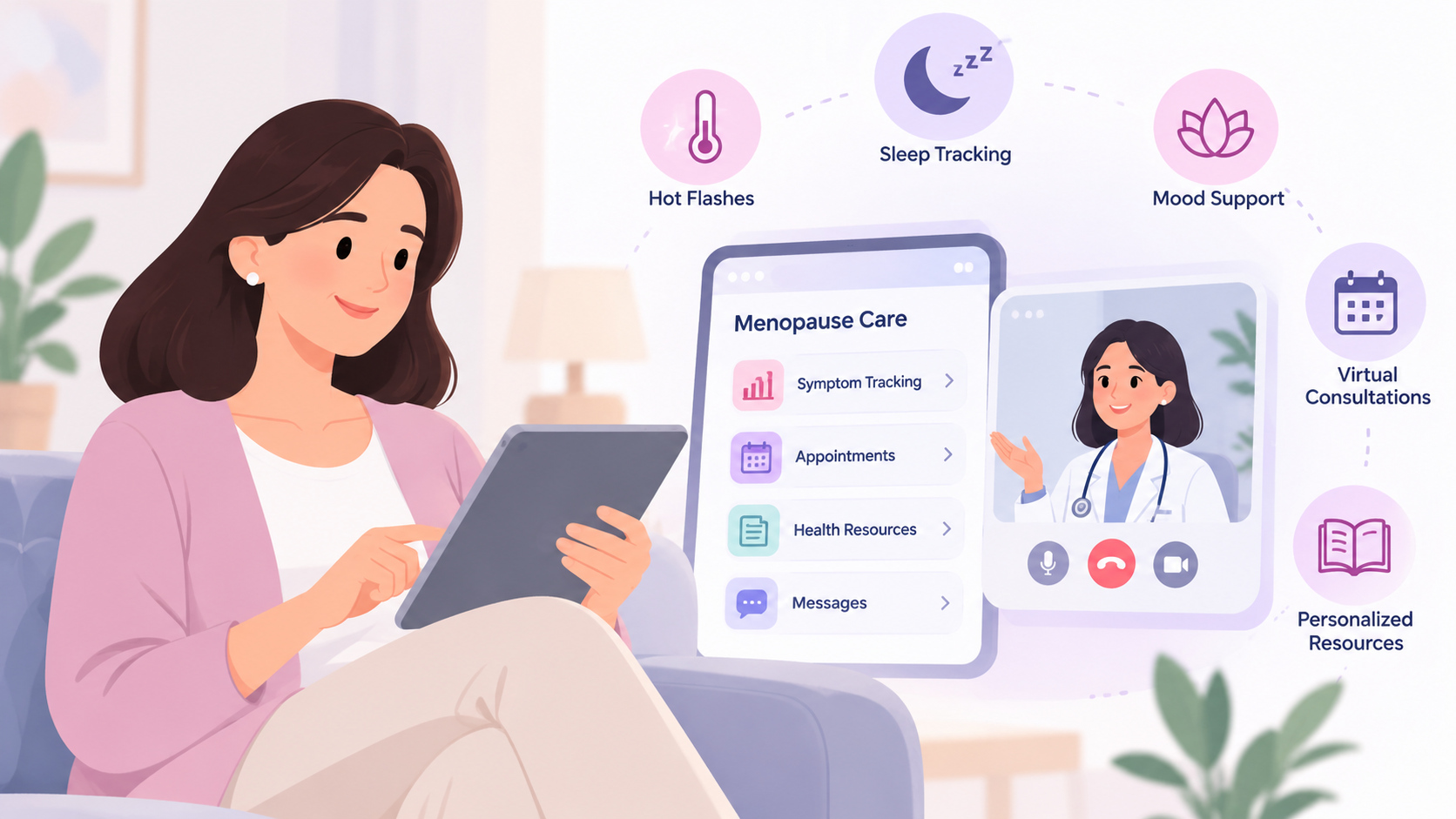
A woman may use a fertility app in her twenties, a pregnancy monitoring platform in her thirties, and a menopause care solution later in life.
Each platform serves a different purpose. Each collects useful health information. But what happens when she moves from one stage of care to another?
In many cases, she starts again.
New forms. New medical histories. Different healthcare providers. Separate applications that don't communicate with one another.
This raises an important question: If women's healthcare needs evolve throughout life, shouldn't the technology supporting them evolve together?
That's where connected digital care and thoughtful FemTech software development can make a meaningful difference.
Women's Healthcare Is a Journey, Not a Series of Separate Services
Women's healthcare is often organized around specific conditions or life stages.
Fertility clinics focus on reproductive care. Maternal healthcare providers support pregnancy and childbirth. Menopause specialists help women manage hormonal changes and related health concerns.
Each service has its own clinical requirements, workflows, and technology.
However, a patient's healthcare journey doesn't always fit neatly into these categories.
Medical history, treatment information, medications, and previous health concerns may remain relevant across different stages of life.
When healthcare systems cannot securely exchange appropriate information, patients may have to repeat details, retrieve records manually, or navigate disconnected services.
Connected women's healthcare technology aims to reduce these gaps while keeping patients and healthcare professionals informed.
Where Digital Care Experiences Become Disconnected
Imagine someone receiving fertility treatment.
Her clinic uses one system for appointments, another for laboratory results, and a separate application for patient communication.
Later, during pregnancy, she begins using a different healthcare platform.
Her new care team may not have easy access to relevant previous information.
The technology exists, but the experience remains fragmented.
This can create challenges for both patients and healthcare organizations:
-
Repeated information: Patients may need to provide the same medical details multiple times.
-
Disconnected records: Relevant information may be spread across different systems.
-
Manual coordination: Healthcare staff spend time transferring information or following up on missing records.
-
Limited continuity: Moving between providers or services can become complicated.
-
Poor patient experience: Multiple portals and applications can make healthcare harder to navigate.
Solving these problems requires more than developing another mobile application.
It requires a connected approach to healthcare technology.
How FemTech Software Development Supports Connected Care
Modern FemTech software solutions can help healthcare organizations build digital experiences around actual patient and clinical needs.
The goal is not necessarily to combine every healthcare service into one application. Instead, it is to make appropriate information and workflows work together securely.
1. Connecting Fertility and IVF Care
Fertility treatment involves appointments, laboratory tests, medication schedules, procedures, and ongoing communication.
Digital fertility management solutions can help clinics organize these activities and make relevant information more accessible.
When properly integrated with electronic health records (EHRs) and laboratory systems, they may also reduce repetitive administrative work.
For example, an integrated patient portal can allow patients to view scheduled appointments and authorized results without switching between several disconnected platforms.
2. Supporting Pregnancy and Maternal Healthcare
During pregnancy, healthcare needs and monitoring requirements can change.
Maternal health platforms can support appointment management, patient communication, education, and remote monitoring where clinically appropriate.
Connected systems may also help care teams coordinate information between prenatal visits, specialist consultations, and postpartum follow-ups.
However, remote monitoring should have clear processes for reviewing information and responding when clinical attention is needed.
The technology should support clinicians, not replace their judgment.
3. Improving Menopause and Hormonal Health Support
Menopause care is another area where continuity matters.
Women may experience symptoms that require ongoing assessment, lifestyle guidance, or treatment discussions with healthcare professionals.
Digital menopause platforms can help users record symptoms, access reliable information, manage appointments, and communicate with care teams.
But symptom tracking alone does not create connected care.
The real value comes when relevant information can support appropriate clinical conversations and follow-up decisions.
Why Healthcare Interoperability Matters
One of the most important elements of connected FemTech platforms is healthcare interoperability.
In simple terms, interoperability allows authorized healthcare systems to exchange and use relevant information.
Technologies and standards such as HL7 FHIR can support this exchange through structured data and APIs.
For example, a women's telehealth platform may need to connect with an existing EHR system rather than maintain a completely separate patient record.
Interoperability can support:
-
More consistent access to relevant medical information
-
Reduced duplication of administrative work
-
Better coordination between healthcare providers
-
Improved continuity across appropriate care settings
-
More connected patient experiences
The US Office of the National Coordinator for Health Information Technology identifies interoperability as an important foundation for patient-centered care and access to electronic health information.
However, interoperability is not simply a technical connection. Organizations also need appropriate patient permissions, data governance, clinical workflows, and security controls.
Can AI Improve Connected Women's Healthcare?
Artificial intelligence can also support women's digital healthcare, particularly when organizations have reliable data and clearly defined workflows.
Potential applications include assisting with clinical documentation, organizing patient communications, supporting administrative scheduling, and helping authorized professionals review information.
But AI requires careful implementation.
An algorithm cannot resolve poor data quality or disconnected processes on its own.
Before introducing AI-powered features, FemTech companies should consider whether the technology addresses a genuine need, whether its outputs can be appropriately reviewed, and how potential errors will be handled.
A useful AI feature should make healthcare work better, not simply make the platform appear more advanced.
Privacy and Compliance Must Be Built Into the Experience
Women's healthcare platforms handle sensitive information, including reproductive health records, fertility treatment details, pregnancy information, and hormonal health data.
Protecting this information is essential.
For organizations operating in the United States, relevant requirements may include HIPAA, applicable state privacy laws, and the FTC's Health Breach Notification Rule, depending on the type of organization and product.
Importantly, not every consumer FemTech application is automatically covered by HIPAA.
This makes it necessary to evaluate the specific product, data flows, and legal obligations before development.
Secure access, appropriate consent, encryption, and clear data-sharing practices should be considered from the beginning.
Building Better Digital Care Experiences
For FemTech founders and healthcare organizations, building connected care begins with understanding where patients and providers experience unnecessary friction.
Before investing in a new platform, businesses should ask:
-
Which parts of the patient journey are currently disconnected?
-
Where do healthcare teams repeat manual work?
-
What existing systems need to communicate?
-
Which patient information should be shared, and under what permissions?
-
How will the solution remain secure and scalable as services expand?
The answers can help guide decisions about custom software development, system integration, workflow automation, and platform modernization.
Not every organization needs an entirely new system. Sometimes, improving the connections between existing technologies delivers greater practical value.
Final Thoughts
Women's healthcare needs change throughout life, but patients should not have to start from zero every time they enter a new stage of care.
From fertility and pregnancy to menopause and ongoing preventive care, connected digital experiences can help make healthcare easier to navigate.
For healthcare organizations, the future of FemTech software development should focus on building systems that support continuity, secure information exchange, and meaningful patient experiences.
Because better women's healthcare doesn't come from adding more disconnected applications.
It comes from making the right information, people, and technology work better together.

 English
 French
 Deutsch
 Русский
 Greek