Sanitary stainless steel butterfly valves are widely used in industries where cleanliness, corrosion resistance, and reliable flow control are essential. These valves are designed for hygienic processing systems and are commonly found in food and beverage plants, dairy facilities, breweries, pharmaceutical manufacturing, biotechnology, cosmetics, and other applications where product contamination must be minimized. Their simple construction, compact size, and quarter-turn operation make them practical for frequent flow isolation and process control.
What Are Sanitary Stainless Steel Butterfly Valves
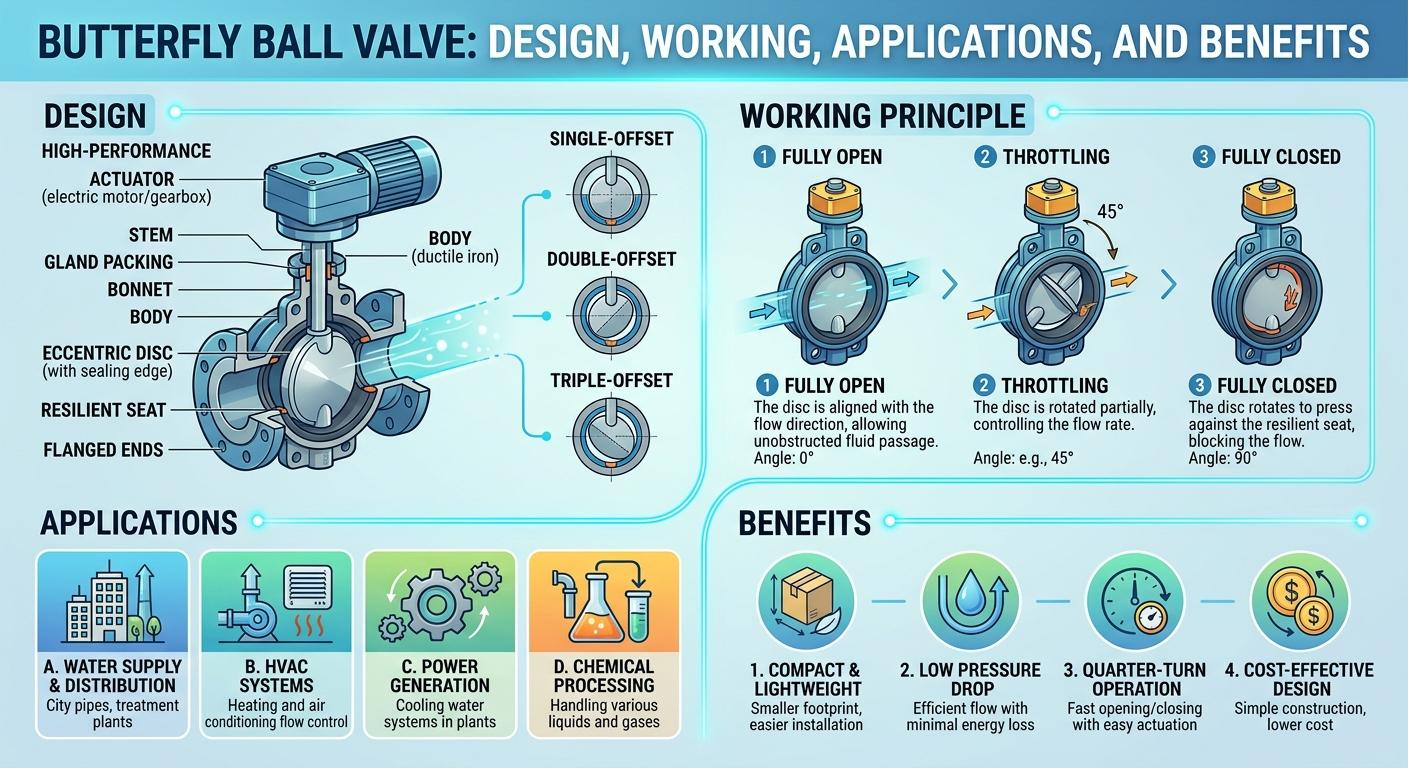
A sanitary stainless steel butterfly valve uses a rotating disc positioned inside the pipeline to regulate or stop fluid flow. Turning the disc approximately 90 degrees moves the valve between open and closed positions. This quarter-turn operation allows fast shutoff and makes the valve suitable for processes that require frequent batch changes, cleaning, or product transfer.
Unlike conventional industrial butterfly valves, sanitary designs focus heavily on hygienic construction. The internal surfaces are generally smooth and designed to reduce areas where product residue can collect. Stainless steel construction also provides good corrosion resistance and makes the valve suitable for repeated cleaning procedures.
Why Stainless Steel Is Important
Stainless steel is an important material for sanitary processing equipment because it can withstand moisture, many cleaning chemicals, and demanding operating environments. SS304 and SS316L are commonly used, with 316L often selected for more demanding food, pharmaceutical, and high-purity applications.
The low-carbon composition of 316L also makes it well suited to fabricated piping systems where welding is required. Properly finished stainless steel surfaces help reduce residue buildup and support effective cleaning. In hygienic applications, internal surface finishes such as Ra 0.8 µm or finer may be specified depending on the process and applicable requirements.
Hygienic Design and Easy Cleaning
One of the main advantages of sanitary stainless steel butterfly valves is their hygienic design. Product-contact areas are designed to minimize crevices, dead spaces, and locations where material can accumulate. A smooth internal passage makes cleaning and inspection easier.
Many sanitary valve systems are also designed for Clean-in-Place (CIP) processes. CIP allows process equipment and piping to be cleaned without completely dismantling the system. Some applications also require Steam-in-Place (SIP) capability, particularly in pharmaceutical and other high-purity environments. The valve's seat and seal materials must be selected according to the cleaning chemicals and temperatures involved.
Common Connection Options
Sanitary butterfly valves are available with several connection configurations to suit different piping systems. Tri-clamp connections are especially common because they allow quick installation, removal, inspection, and cleaning. Welded connections may be preferred where permanent hygienic piping is required, while threaded connections can be used in suitable applications.
Connection standards may include options such as DIN, ISO, SMS, and 3-A-compatible configurations. The appropriate connection depends on the piping design, industry requirements, available equipment, and cleaning procedures.
Applications of Sanitary Butterfly Valves
Sanitary stainless steel butterfly valves are used in many industries. In dairy processing, they can be installed on milk, cream, and other liquid product lines. Beverage manufacturers use them for water, juices, syrups, and other process liquids. Breweries and wineries also use hygienic butterfly valves for product transfer and cleaning circuits.
Pharmaceutical and biotechnology facilities require a higher level of control over contamination and cleaning. In these environments, stainless steel sanitary valves may be combined with polished surfaces, suitable elastomer materials, and automated pneumatic actuators. Cosmetic and personal-care manufacturing can also benefit from sanitary valve designs when maintaining product purity and easy cleaning is important.
Manual and Automated Operation
Sanitary stainless steel butterfly valves can be operated manually or automatically. Manual versions generally use a handle or multi-position handle for straightforward flow isolation. They are suitable for smaller systems or applications where operators can easily access the valve.
Pneumatic actuators are useful when valves need to be operated remotely or repeatedly as part of an automated production process. Electric actuation can also be used where appropriate. Position feedback and control accessories can be added when the process requires monitoring of the valve's open or closed position.
Selecting the Right Valve
Choosing the correct sanitary butterfly valve requires consideration of several factors. The first is the process fluid and its chemical properties. The valve body and wetted components should be compatible with the product and cleaning chemicals. Seat and gasket materials such as EPDM, silicone, PTFE, or FKM may be selected depending on temperature, chemical exposure, and application requirements.
Valve size, pressure rating, operating temperature, connection type, surface finish, and actuation method should also be considered. For regulated food or pharmaceutical processes, buyers may need material certificates, surface-finish documentation, and relevant sanitary certifications.
Maintenance and Long-Term Performance
Although sanitary butterfly valves have a relatively simple design, regular inspection is important for reliable operation. Operators should check seals, seats, handles, actuators, and connections for signs of wear or leakage. Increasing operating torque can indicate seal wear, buildup, or another mechanical issue.
Keeping the valve and surrounding piping properly cleaned also helps maintain hygienic performance. Replacement seals should always be compatible with the process fluid and cleaning conditions. Following the manufacturer's maintenance recommendations can help extend valve service life and reduce unexpected downtime.
Conclusion
Sanitary stainless steel butterfly valves provide a practical solution for hygienic flow isolation in food, beverage, dairy, pharmaceutical, biotechnology, and cosmetic processing systems. Their stainless steel construction, smooth internal surfaces, compact design, and quick quarter-turn operation make them suitable for applications that require reliable shutoff and regular cleaning.
The right valve should be selected according to the process fluid, temperature, pressure, connection, seal material, surface finish, and cleaning requirements. With appropriate specification and maintenance, sanitary stainless steel butterfly valves can support clean, efficient, and dependable process piping systems.




 Հայերեն
 English
 French
 Deutsch
 Greek
Greek