


Replacement Door Locks: How to Choose the Right Lock for Your Property
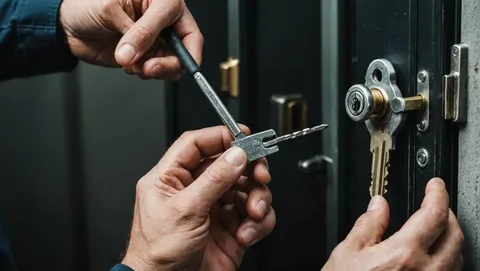
Choosing replacement door locks is not only about finding a lock that fits the door. The right option depends on the door type, how the entrance is used, who needs access, and whether the existing hardware is still suitable.
A careful check before installation can help you avoid buying a lock that does not fit or does not solve the original problem.
Start With the Door Type
Different doors require different locking systems.
Before choosing a replacement, identify whether the door is:
-
Wooden
-
Aluminium
-
Steel
-
Glass
-
Sliding
-
A standard hinged door
The construction of the door can affect the type of lock that can be installed.
For example, a sliding patio door may need a different mechanism from a conventional front door. Trying to use standard hinged-door hardware on a sliding system can create compatibility problems.
Check How the Existing Lock Is Fitted
Look at the current lock before removing it.
Check where the cylinder, latch, handle, and mounting screws are positioned. If possible, record the important measurements and take clear photos of the existing hardware.
This information can help when selecting a replacement.
A lock that looks similar may still have a different backset, cylinder size, mounting arrangement, or latch position.
Consider How the Door Is Used
The main entrance of a home may need a different setup from a bedroom, storage room, office, or balcony door.
Think about how often the door is used and who needs access.
A frequently used entrance may benefit from a durable mechanism designed for regular operation. A restricted internal room may have different requirements.
The goal is to match the lock to the actual purpose of the door.
Review Who Has the Keys
Replacing a lock can also be useful when access needs to change.
You may have recently moved into a property, lost keys, changed tenants, or had employees or contractors who no longer require access.
In these situations, simply making another copy of an old key may not address the access issue.
A new lock or another suitable access arrangement can prevent old keys from continuing to operate the door.
Pay Attention to Aluminium Doors
Aluminium doors often use specific profiles and locking hardware.
A replacement should match the existing door configuration rather than being selected only by appearance.
If you have an aluminium entrance, an aluminium door lock solution can be considered based on the door profile, measurements, and existing mechanism.
Professional assessment can be useful when the locking system is built into the door frame or connected to several points.
Sliding Doors Need Different Consideration
Sliding doors operate differently from hinged doors.
The lock has to work with the sliding panel and frame while allowing the door to move smoothly along its track.
Before replacing one, check whether the problem is actually the lock or whether the track, alignment, handle, or strike area is contributing to the issue.
For entrances such as patios and balconies, a suitable sliding door lock system can provide a better match for the door's construction.
Think About Security and Convenience Together
A replacement lock should be practical for the people using the door.
For some entrances, a traditional key-operated lock may be sufficient.
Other properties may benefit from features such as electronic access, keypad entry, or smart locking systems.
However, adding more features is not automatically necessary.
Consider how the door is used and how access will be managed before choosing a more complicated system.
Check the Door Frame Too
A new lock cannot compensate for a damaged or badly aligned door frame.
Before installation, check whether the door closes properly and whether the latch or bolt lines up with the strike plate.
If the door has to be pushed, lifted, or pulled unusually hard before the lock engages, there may be an alignment problem.
Fixing that issue may be necessary for the new lock to work correctly.
Do Not Choose Only by Price
The cheapest replacement may not always be suitable for the door.
Consider the lock's dimensions, construction, compatibility, expected use, and installation requirements.
A poorly matched lock can create additional problems even when the hardware itself is new.
It is better to select a lock based on the door and access requirements rather than price alone.
Test the Replacement After Installation
Once the new lock is installed, test it several times.
Check the key or access method.
Open and close the door repeatedly.
Make sure the latch or bolt moves smoothly without excessive force.
Also check the lock with the door open and closed. If it works normally when open but becomes difficult when closed, the door may need alignment.
Final Thoughts
Replacement door locks should be selected according to the door, existing hardware, and access requirements.
Before buying one, check the door type, measure the existing mechanism, review who needs access, and inspect the frame and surrounding hardware.
For unusual doors such as aluminium or sliding systems, compatibility becomes especially important.
Taking a little time to check these details can make the replacement process easier and reduce the risk of installing a lock that does not properly suit the door.

 English
 French
 Deutsch
 Русский
 Greek
Greek