


Camino Gummies vs. Traditional Cannabis Edibles: What's the Difference?
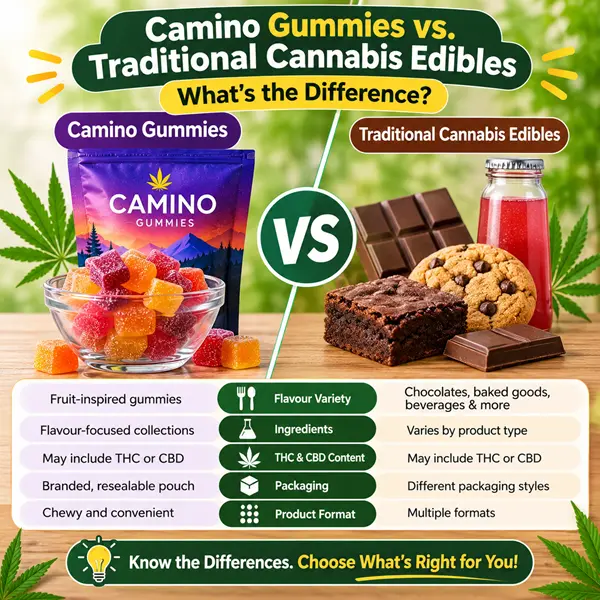
The cannabis edible market has expanded significantly, offering consumers a wider selection of products than ever before. From chocolates and baked goods to beverages and fruit-flavoured gummies, cannabis-infused products are now available in several different formats. Among these options, Camino Gummies have developed a recognizable identity because of their flavour-focused collections, distinctive packaging, and product variety.
However, how do Camino Gummies compare with traditional cannabis edibles? Are they simply another type of gummy, or are there meaningful differences in their formulation, presentation, and overall product experience?
Understanding these distinctions can help adults become more familiar with the cannabis edible market. This comparison explores the key differences between Camino Gummies and traditional cannabis edibles, including ingredients, flavours, cannabinoid content, packaging, and important safety considerations.
1. Understanding Camino Gummies
Camino Gummies are cannabis-infused edible products associated with the Camino brand. They are available in different flavour combinations and formulations, depending on the product collection and market.
Unlike conventional confectionery, these gummies contain cannabinoids such as THC, CBD, or combinations of different compounds.
One of their recognizable characteristics is the emphasis on flavour variety. The brand offers different product collections with distinct flavour profiles and product identities.
Camino also uses branded packaging that provides information about the product's cannabinoid content, ingredients, and serving details. These characteristics help distinguish the products within the competitive cannabis edible market.
2. What Are Traditional Cannabis Edibles?
Traditional cannabis edibles refer to food and beverage products containing cannabis compounds. They have been available in several formats, including baked goods, chocolates, candies, capsules, and infused beverages.
Historically, some cannabis edibles were homemade products, such as brownies and cookies. Modern commercial products, however, include more standardized formulations and professionally manufactured options.
Traditional edibles can vary considerably in their ingredients, cannabinoid concentrations, textures, and packaging.
For example, cannabis-infused chocolates offer a different texture and flavour experience compared with fruit-flavoured gummies. Similarly, infused beverages provide another product format with different ingredients and consumption characteristics.
The term traditional cannabis edibles therefore covers a broad category rather than one specific product type.
3. Flavour Variety and Product Selection
Flavour is one of the noticeable differences when comparing Camino Gummies with many traditional cannabis edibles.
Camino places considerable emphasis on flavour-focused collections. Its product range has included fruit-inspired combinations and other distinctive flavour profiles.
Traditional edibles also offer flavour variety, but the available choices depend heavily on the manufacturer and product category.
For example:
-
Gummies: Often feature fruit-inspired flavours, chewy textures, and different flavour combinations.
-
Chocolates: Typically focus on cocoa, milk chocolate, dark chocolate, and additional confectionery ingredients.
-
Baked goods: May include brownies, cookies, and other familiar desserts.
-
Infused beverages: Can include different drink flavours and formulations.
Camino Gummies stand out within this wider category through their branded flavour collections and recognizable gummy format.
However, flavour preference is subjective, and consumers should also consider ingredients and product information when comparing options.
4. Differences in Ingredients and Formulation
Ingredients are another important consideration.
Camino Gummies use gummy-style formulations, which may include sweeteners, flavouring ingredients, gelling agents, and cannabinoids. Specific ingredients can differ between individual products.
Traditional cannabis edibles have a much wider range of formulations because they include different food categories.
For instance, chocolate products may contain cocoa, dairy ingredients, and sweeteners, while baked goods can include flour, oils, eggs, and other conventional baking ingredients.
Cannabis beverages have their own formulations, which may include water, flavourings, sweeteners, and ingredients used to incorporate cannabinoids.
Consumers with allergies or dietary restrictions should always review the ingredient list rather than assuming products from the same brand have identical formulations.
5. THC and CBD Content
One of the most important differences between cannabis edibles is their cannabinoid composition.
THC and CBD are two commonly discussed cannabinoids, but they have different properties.
THC: Tetrahydrocannabinol is the primary intoxicating cannabinoid in cannabis. It can affect perception, coordination, judgment, and reaction time.
CBD: Cannabidiol is non-intoxicating and does not produce the same intoxicating effects as THC. However, it can interact with certain medications and may cause unwanted effects.
Camino Gummies are available in different formulations, depending on the product and market. Traditional cannabis edibles also vary in cannabinoid content.
When comparing products, consumers should check the amount of THC and CBD per serving and the total amount in the package.
These measurements are particularly important because a product's appearance or flavour does not indicate its cannabinoid concentration.
6. Packaging and Product Identification
Packaging can make a noticeable difference when comparing branded gummies with other cannabis edibles.
Camino uses recognizable packaging and product collections that help consumers identify different varieties. Product labels provide important information about ingredients, cannabinoid content, serving sizes, and relevant warnings.
Traditional cannabis edibles can have different packaging styles depending on their manufacturers and product categories.
Regardless of appearance, responsible product identification is essential. Consumers should purchase cannabis products only from authorized retailers in locations where they are legally permitted.
They should also check that packaging is intact and includes appropriate regulatory information.
Cannabis edibles should remain in their original child-resistant packaging and must be stored securely away from children and pets.
7. How Do Their Effects Compare?
The effects of cannabis edibles depend on their cannabinoid content, formulation, individual characteristics, and other factors.
An important point is that Camino Gummies and traditional cannabis edibles both belong to the edible category. Their effects are therefore influenced by the cannabinoids they contain rather than simply their shape or flavour.
When cannabis is consumed orally, cannabinoids pass through the digestive system and are processed by the body. Consequently, noticeable effects can take considerably longer to develop than with inhaled cannabis.
Effects may also last longer than expected.
This delayed onset makes it particularly important not to consume additional amounts simply because the initial effects are not immediately noticeable.
Consumers should avoid driving, operating machinery, or combining THC products with alcohol or other intoxicating substances.
8. Which Option Should Consumers Understand Better?
There is no universal answer because Camino Gummies and traditional cannabis edibles serve different product preferences.
Camino Gummies may attract attention from people interested in branded gummy products, flavour variety, and different formulations.
Traditional cannabis edibles offer a broader selection of formats, including chocolates, baked goods, beverages, and other infused products.
The most useful comparison depends on several factors:
-
Product ingredients and potential allergens.
-
THC and CBD content.
-
Manufacturing and testing information.
-
Packaging and serving details.
-
Local cannabis regulations.
-
Secure storage requirements.
Rather than choosing a product based entirely on branding or appearance, consumers should evaluate the actual product information.
Conclusion
The comparison between Camino Gummies and traditional cannabis edibles highlights several differences in flavour variety, formulation, packaging, and product presentation.
Camino Gummies stand out through their recognizable branding, flavour-focused collections, and familiar gummy format. Traditional cannabis edibles, meanwhile, cover a much broader range of products, including chocolates, baked goods, candies, and beverages.
Both categories can contain THC, CBD, or other cannabinoids, making product labels and ingredient information essential considerations.
Ultimately, understanding these differences helps readers become more familiar with the cannabis edible market. Regardless of the product format, checking local regulations, reviewing cannabinoid content, and following responsible storage practices remain important.

 Հայերեն
 English
 Deutsch
 Русский
 Greek