


Loyalty Software Development Services for Customer Rewards
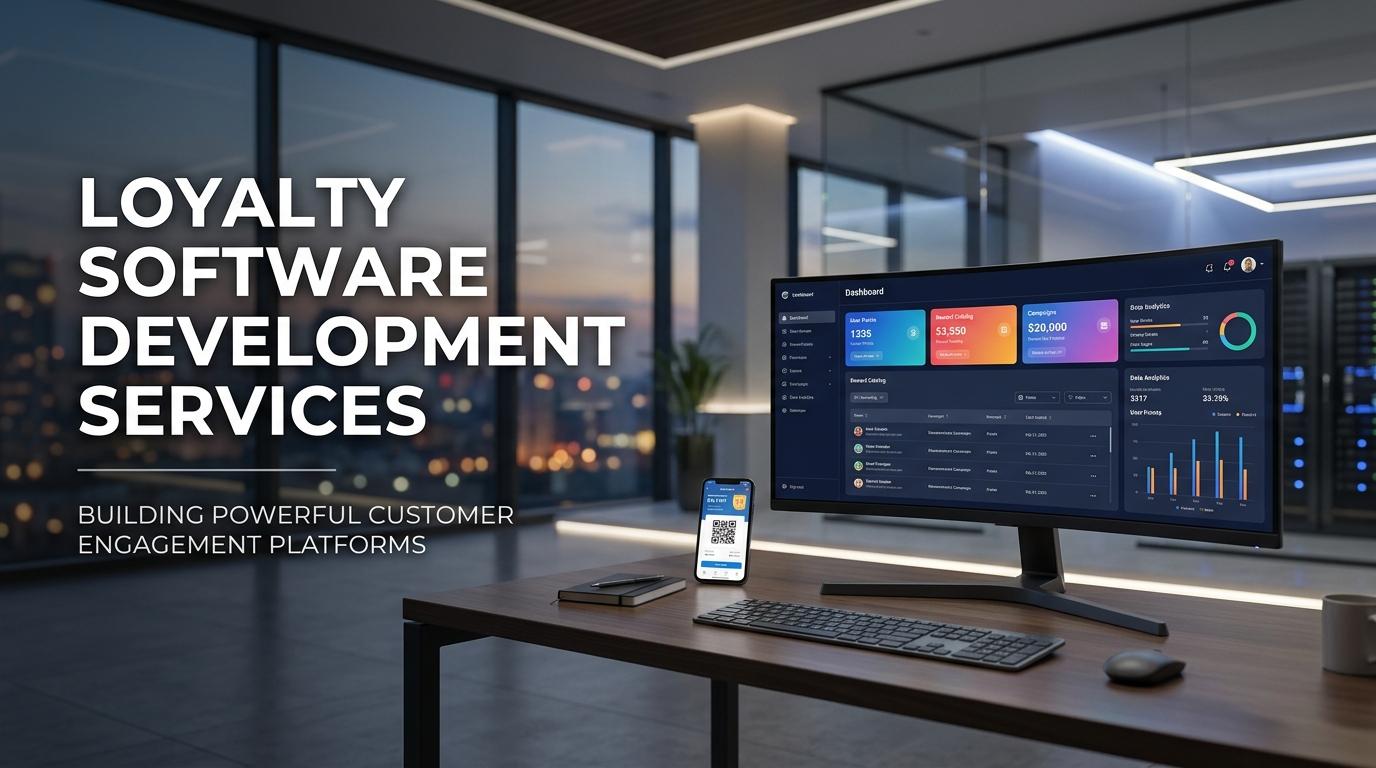
Customer loyalty does not usually come from a single purchase or discount. People are more likely to return when a business gives them a reason to continue buying and makes rewards easy to understand and use. Loyalty Software Development Services help businesses build digital loyalty platforms that can manage customer points, rewards, offers, memberships, and purchase activity from a centralized system. With the right setup, businesses can use automated customer rewards to create a more consistent loyalty experience while giving their teams better control over customer data and reward programs.
What Are Loyalty Software Development Services
Loyalty Software Development Services involve designing and developing digital systems that help businesses create, operate, and manage customer loyalty programs.
The software can be built around the specific needs of a business rather than forcing the company to work within a fixed loyalty structure.
Depending on the business model, a loyalty platform may include
- Customer registration
- Loyalty accounts
- Points management
- Reward catalogs
- Membership tiers
- Digital coupons
- Personalized offers
- Purchase tracking
- Referral programs
- Reward redemption
- Customer analytics
- Campaign management
For example, a retail business may give customers points after every purchase. A restaurant could offer rewards after a certain number of visits, while an online store might provide members with exclusive discounts.
The underlying software can be configured around these different reward structures.
Why Businesses Invest in Loyalty Software
Managing a loyalty program manually becomes difficult as the customer base grows. Teams may have to calculate points, update customer records, issue rewards, monitor redemptions, and handle customer questions.
A digital loyalty platform can automate many of these processes.
When a customer completes an eligible transaction, the system can calculate the relevant points or reward according to the program rules. The customer can then see the updated balance through an app, website, or other digital channel.
This gives both customers and businesses a clearer view of the loyalty program.
Automated Customer Rewards
Automated customer rewards can reduce the amount of manual work required to operate a loyalty program.
For example, a business could create a rule that gives customers 10 points for every eligible purchase. Once the transaction is completed, the system can calculate the points and add them to the customer's account.
Businesses can also create rules for
- Birthday rewards
- First purchase rewards
- Referral bonuses
- Spending milestones
- Membership benefits
- Promotional campaigns
- Repeat purchase rewards
- Special event offers
Automation helps ensure that rewards are issued according to predefined rules.
The rules still need to be designed carefully. If customers cannot easily understand how they earn or use rewards, even a technically strong system may create confusion.
Loyalty Software Development
Loyalty software development can include everything from planning the loyalty structure to designing the customer interface, developing backend systems, connecting business applications, testing the platform, and maintaining it after launch.
A typical development process may involve
- Identifying business goals
- Defining loyalty rules
- Planning customer journeys
- Designing the platform
- Developing core features
- Integrating existing systems
- Testing transactions and rewards
- Launching the platform
- Monitoring usage
- Adding new capabilities when required
This approach allows the loyalty platform to grow alongside the business.
Loyalty Program Software
Loyalty program software provides the technical foundation for running digital reward programs.
Businesses can create different loyalty models depending on their customers and products.
Points-Based Programs
Customers earn points based on purchases or other qualifying activities. Points can later be exchanged for discounts, products, vouchers, or other benefits.
Tier-Based Programs
Customers can move between membership levels based on spending, purchase frequency, or other criteria.
Each tier can have different benefits.
Cashback Programs
Customers receive a monetary benefit based on eligible transactions.
Visit-Based Programs
Customers receive a reward after completing a specific number of visits or purchases.
Referral Programs
Customers receive benefits for referring new customers who complete qualifying actions.
The software can support one model or combine several approaches.
Customer Loyalty Software
Customer loyalty software helps businesses maintain a structured relationship with their loyalty members.
A customer profile can contain information such as
- Contact information
- Membership level
- Points balance
- Purchase history
- Reward history
- Coupon usage
- Preferences
- Referral activity
Having this information in one place can help businesses understand how customers interact with the loyalty program.
For example, a business may notice that some customers regularly earn points but rarely redeem them. That information could lead the team to review whether the reward options are clear and useful.
Loyalty Rewards Software
Loyalty rewards software focuses on the creation, distribution, tracking, and redemption of customer rewards.
A reward catalog might include
- Discount vouchers
- Free products
- Cashback
- Promotional offers
- Membership benefits
- Exclusive products
- Service upgrades
Businesses can establish eligibility rules for each reward.
The platform can also track when rewards are issued, redeemed, expired, or cancelled.
This helps reduce confusion around reward balances and provides businesses with a record of loyalty activity.
Loyalty Management Software
Managing a loyalty program requires more than issuing points.
Loyalty management software can provide administrative tools for managing customers, reward rules, campaigns, memberships, transactions, and reports.
Managers may be able to
- Create reward rules
- Configure membership tiers
- Add or remove rewards
- Set reward expiry periods
- Monitor redemptions
- Review customer activity
- Manage promotional campaigns
- Generate reports
Centralized management can be particularly useful when several stores, brands, or sales channels participate in the same loyalty program.
Customer Retention Software
Businesses often use loyalty programs as part of a broader customer retention software strategy.
The purpose is not simply to give away discounts. A well designed program can provide customers with reasons to return and interact with the business.
For example, a retailer could provide additional rewards when customers purchase regularly within a specific period. A restaurant could provide a benefit after several visits.
These rules can be designed around the purchasing patterns that matter to the business.
Retention strategies should also consider the cost of rewards. A program needs to provide meaningful benefits to customers while remaining financially sustainable for the business.
Digital Loyalty Programs Across Multiple Channels
Customers may interact with a business through stores, websites, mobile apps, social channels, or other digital platforms.
A loyalty platform can connect these interactions when the underlying systems are integrated properly.
For example, a customer may purchase an item through an online store and later visit a physical location. If both channels are connected to the same loyalty account, the customer can potentially earn and use rewards across both channels according to the program rules.
This creates a more consistent loyalty experience.
Mobile Loyalty Applications
A mobile app can provide customers with direct access to their loyalty accounts.
Depending on the application, customers may be able to
- View points
- Browse rewards
- Redeem offers
- Receive notifications
- View purchase history
- Access membership benefits
- Find participating stores
- Manage account information
Businesses can also use mobile notifications to communicate relevant offers and program updates.
The design should remain simple. Customers should not have to navigate through several screens to find their points or available rewards.
Loyalty Analytics and Reporting
A loyalty platform can generate useful data about customer activity.
Businesses may track
- New loyalty members
- Active members
- Points earned
- Points redeemed
- Reward redemption rates
- Purchase frequency
- Average transaction value
- Referral activity
- Membership tier activity
These reports can help teams understand which parts of the loyalty program are being used and where changes may be needed.
For example, if one reward is rarely redeemed while another is frequently selected, the business can investigate the reasons and decide whether its reward catalog needs adjustment.
Integrating Loyalty Software With Existing Systems
A loyalty platform rarely operates alone.
Businesses may already use point of sale systems, ecommerce platforms, CRM systems, payment systems, mobile applications, and marketing tools.
Loyalty Software Development Services can include integrations with these systems so that transactions and customer information can move between platforms.
For example, when a customer completes a purchase through a connected POS system, the transaction can be sent to the loyalty platform. The loyalty system can then calculate eligible points and update the customer's account.
Integration requirements should be planned early because they can affect the architecture and development process.
Security and Customer Data
Loyalty platforms handle customer information and transaction data, so security should be considered from the beginning of development.
Businesses should evaluate areas such as
- User authentication
- Role based access
- Data encryption
- Secure APIs
- Audit logs
- Access controls
- Data backup
- Privacy requirements
The specific security measures should depend on the type of information collected, the systems involved, and applicable legal and regulatory requirements.
How to Choose a Loyalty Software Development Partner
When selecting a development partner, businesses should look beyond the basic feature list.
Consider whether the provider can support
- Custom loyalty rules
- Mobile applications
- Web based loyalty portals
- POS integration
- Ecommerce integration
- CRM integration
- Reward management
- Customer segmentation
- Analytics
- API development
- Security
- Ongoing maintenance
It is also useful to review how the provider approaches testing and future changes.
Loyalty programs often evolve after launch. New rewards, membership levels, campaigns, and sales channels may be added later. The software should therefore be designed with reasonable flexibility.
Final Thoughts
A loyalty program works best when customers can easily understand how they earn rewards, what they can redeem, and why remaining a member is useful. Behind that simple experience is a combination of customer data, business rules, transaction processing, reward management, and system integration.
Loyalty Software Development Services can help businesses build this foundation around their own requirements. From loyalty program software and automated customer rewards to customer loyalty software, loyalty rewards software, and customer retention software, businesses can create different digital loyalty programs based on their products and customers.
The most important part is to start with the actual customer and business needs. When reward rules are clear, transactions are handled accurately, and customers can access their benefits without unnecessary effort, loyalty technology becomes a practical part of the overall customer relationship strategy.

 Հայերեն
 English
 French
 Deutsch
 Русский