


How to Choose the Right Rug for Every Room in Your Home
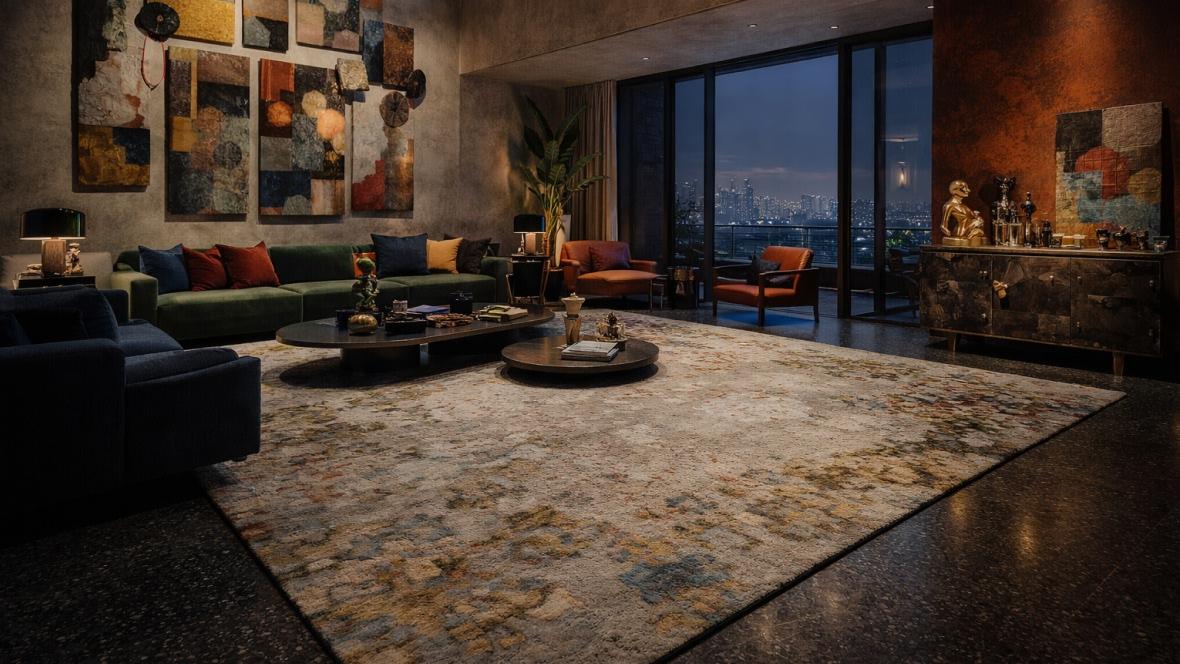
A rug can change how a room looks and feels more than almost any other piece of décor. It adds color, texture and warmth, and it ties the furniture together. It’s also one of the easiest things to get wrong. People buy a size that’s too small, a pile that’s too thick for the traffic, or a pattern that fights with everything else in the room.
This guide covers the three rooms where people most often get it wrong.
Start with the size, not the pattern
Measure before you browse. Most rug mistakes come down to size.
- Too small: A rug that floats in the middle of the room makes the space look smaller and the furniture look disconnected.
- Too large: A rug that runs wall to wall hides the floor and leaves no border to frame it.
- The rule of thumb: Leave 15–20 cm of bare floor around the rug in a small room and 30–45 cm in a large one.
Use painter’s tape to mark the rug’s footprint on the floor. Leave it down for a day and you’ll see quickly whether the size works.
Living room rugs: anchor the seating area
The living room takes the most foot traffic, so this is where durability matters most. Good living room rugs do two jobs: they define the seating area and they cushion a floor that gets used all day.
Size and placement
- Place the front legs of the sofa and chairs on the rug. This is the easiest way to make the seating feel like one group.
- If the rug is too small for that, make sure at least the front legs of every piece sit on it.
- In an open-plan space, use the rug to mark the living area off from the dining area.
Pile and material
- Choose a low or medium pile for high-traffic rooms. It’s easier to vacuum and doesn’t trap crumbs.
- Wool is soft and hard-wearing but costs more. Polypropylene and polyester blends are cheaper, resist stains and suit homes with children or pets.
- Pick a pattern that hides everyday dirt. Mixed tones and abstract designs forgive more than a plain solid.
Color
If your sofa and walls are neutral, the rug is your chance to add a color or pattern. If the room is already busy, pick a calm rug in a tone drawn from your curtains or cushions.
Bedroom rugs: think about bare feet
The bedroom is where you notice a rug first thing in the morning. Soft bedroom rugs make the room warmer, quieter and more restful, and they spare you a cold floor underfoot.
Placement options
- Under the bed: Put the rug under the bottom two-thirds of the bed and let it extend at least 45 cm on each side. This is the most popular layout.
- Runners on either side: If you want to save money, two runners beside the bed give you the same soft landing in the same spot.
- Under the foot of the bed: A smaller rug works here, but make sure it sits fully under the bed’s end so it doesn’t look like an afterthought.
What to choose
- Go for a softer, denser pile than in the living room. Nobody drags a chair across a bedroom floor.
- Keep colors calm. Soft greys, creams and muted blues help a bedroom feel quiet.
- Use a non-slip pad underneath. It stops the rug from shifting and makes it last longer.
Round rugs: soften a room full of corners
Most rooms are made of straight lines: the sofa, the table, the shelves, the windows. Round rugs break that up and give the eye somewhere gentle to land.
Where they work well
- Under a round dining table: The rug should extend at least 60 cm past the table so chairs stay on it when pulled out.
- In an entryway: A round rug gives a small hall a focal point.
- In a reading corner: Place one under an armchair and a side table to define the nook.
- Layered over a larger rug: A smaller round rug on top of a neutral base adds depth and texture.
Keep round rugs away from rooms where the floor is mostly furniture. Without enough bare space around the rug, it can look cramped.
A quick buying checklist
Before you buy any rug, check these five things:
- Measure the room and mark out the rug’s footprint with tape.
- Match the pile to the traffic. Low pile for busy areas, softer pile for quiet ones.
- Check the material against your lifestyle: pets, children, allergies, and how much cleaning you want to do.
- Plan the layout so furniture sits on or off the rug deliberately.
- Add a non-slip pad to protect both the rug and the floor.
Looking after your rug
A good rug lasts for years with simple care:
- Vacuum once or twice a week, more often in busy rooms.
- Rotate the rug every six months so it wears evenly.
- Blot spills right away. Don’t rub, because that pushes the stain into the fibers.
- Keep it out of strong direct sunlight, which fades color over time.
The takeaway
Choosing a rug doesn’t need to be hard. Get the size right first, match the pile and material to how the room is used, and pick a color that works with what you already own. Do that and each room will feel more finished, whether it’s the living room you use every day or the bedroom you retreat to at night.

 Հայերեն
 English
 Deutsch
 Русский
 Greek