
How Small Businesses Can Use Flyers to Increase Brand Awareness
Getting people to recognize a small business takes more than opening a storefront or creating a social media page. A neighborhood may have hundreds of potential customers, yet many won't notice a new business until they come across its name several times. For owners working with limited advertising budgets, building that familiarity can feel particularly challenging.
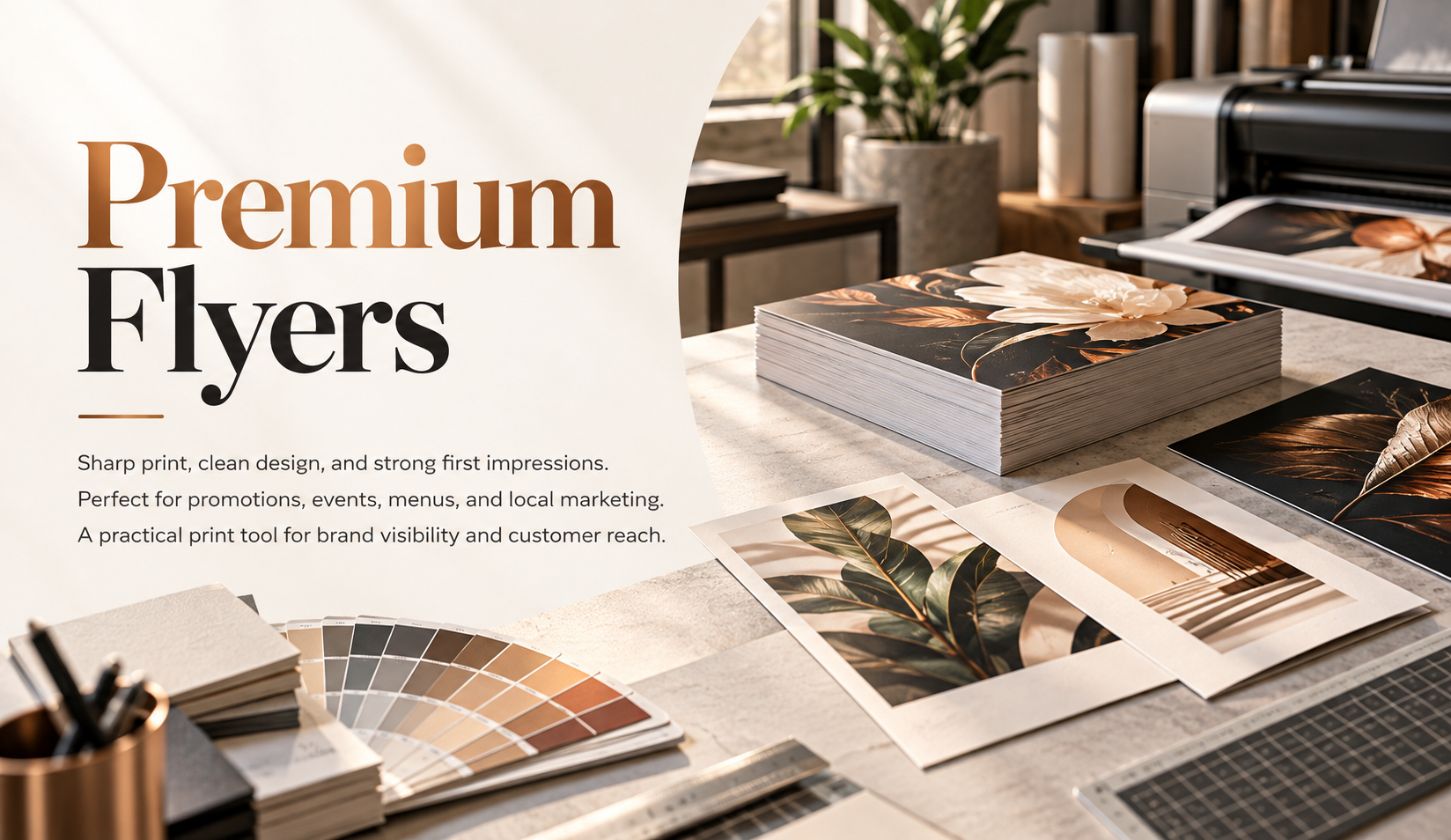
Printed marketing still has a place in this process. Well-designed Flyers help businesses introduce their services, promote local offers, and reach people within their immediate communities. Unlike online advertisements that disappear as people scroll, a useful flyer can remain on a counter, refrigerator, or office desk until someone needs the service.
However, printing thousands of copies doesn't automatically create awareness. The message, design, distribution method, and timing all influence how people respond. We've found that understanding these details before printing helps businesses avoid wasted materials and make better decisions about their local marketing.
How Flyers Help Small Businesses Build Brand Awareness
Brand awareness begins when people recognize a business name and connect it with a particular product or service. They might not need that service immediately, but familiarity can influence which company they consider when the need arises.
For local businesses, this recognition often develops through repeated exposure within a familiar environment. A customer might notice a bakery's flyer at a nearby coffee shop, see its storefront later that week, and remember the name when planning a family gathering.
Create a Physical Connection With Local Customers
Digital advertising offers extensive targeting options, but physical advertising can reach people during everyday activities. Someone visiting a community center or browsing a neighborhood bulletin board may notice a flyer without actively searching for a product.
This creates opportunities for businesses that depend on nearby customers. A cleaning company, tutoring center, or neighborhood restaurant can introduce its services to households within a practical traveling distance. The closer the audience matches the service area, the more useful that exposure becomes.
Build Familiarity Through Consistent Branding
Recognition becomes easier when people encounter the same visual identity across several channels. A flyer should use the same business name, logo, colors, and general tone that customers see on the company's website, storefront, and social media profiles.
Consistency matters more than complicated artwork. When a business changes its appearance with every promotion, customers may struggle to connect the materials with the company they previously noticed. A recognizable design helps each new campaign reinforce earlier impressions.
Plan a Flyer Marketing Strategy Around the Right Audience
One of the most expensive mistakes in flyer marketing happens before the printer starts working. Businesses sometimes choose a quantity first and consider the audience afterward. A large print run may lower the cost per piece, but those savings mean little when the materials reach people who have no reason to respond.
We encourage businesses to identify their audience, campaign objective, and distribution locations before deciding how many copies to order. A smaller, carefully targeted campaign can provide more useful feedback than an ambitious campaign with no clear direction.
Understand Who Actually Needs Your Service
Consider a residential landscaping company. Its ideal customers may include homeowners with private yards rather than residents of apartment buildings without outdoor space. Delivering flyers across both groups without distinction could increase printing and distribution costs unnecessarily.
The same principle applies to other industries. A children's activity center might focus on family-oriented neighborhoods, while a business offering office cleaning could prioritize commercial properties. Understanding these differences helps owners develop messages that speak to real customer needs.
Match the Flyer Message to the Campaign Goal
Not every flyer needs to advertise a discount. Some businesses need to introduce themselves, explain an unfamiliar service, or announce an upcoming event. The strongest message depends on what the audience already knows.
A new dental clinic might emphasize its location, appointment information, and available services. An established restaurant could highlight its updated lunch menu. Both businesses benefit from visibility, but each needs a different reason for customers to pay attention.
Design Business Flyers That People Can Read and Remember
A crowded flyer often reflects an understandable concern: business owners want to make the most of their printing investment. They add every service, several photographs, multiple offers, and detailed contact information. Unfortunately, this approach can make the most important message difficult to find.
Effective flyer design requires prioritization. Readers should understand what the business offers, why the information matters, and what they can do next without searching through dense blocks of text.
Write a Headline That Communicates Immediate Value
A headline such as "Welcome to Our Business" provides little information about the company's services. Something more specific, like "Professional Home Cleaning for Busy Families," helps readers identify the offer immediately.
Clear language usually performs better than clever wording that requires interpretation. When drafting headlines, we recommend focusing on a recognizable customer need rather than trying to fit several marketing messages into one sentence.
Use Photography and Typography With Purpose
Relevant photographs can communicate the nature of a business faster than lengthy descriptions. A bakery can show its actual products, while a landscaping company can feature a completed outdoor project. Authentic images also help customers develop realistic expectations.
Typography deserves equal attention. Readers should be able to distinguish the main headline, supporting information, and contact details at a glance. Strong contrast, comfortable spacing, and readable font sizes help the design work in ordinary lighting conditions.
Protect Image Quality During Printing
A flyer that looks attractive on a phone screen may reveal problems when printed. Low-resolution images, stretched graphics, and incorrect file settings can produce disappointing results, particularly when the design includes product photographs or small lettering.
We recommend checking artwork at its final printed size before approving production. Our guide to blurry flyer printing explains common image-quality problems that businesses should address during design preparation. A careful file review can prevent avoidable reprints.
Choose Flyer Sizes and Paper That Fit Your Business
Print specifications affect more than appearance. They influence production costs, distribution convenience, and how comfortably customers handle the finished material. The most expensive paper doesn't necessarily produce the best outcome for every campaign.
A restaurant sharing weekly specials has different needs from a boutique announcing a premium product launch. Businesses should consider how long people need to keep the flyer and whether the design includes detailed information or large photographs.
Compare Practical Flyer Sizes
A 5.5 × 8.5-inch flyer works well when businesses want a compact handout with enough room for a headline, photograph, and contact details. Its manageable size also makes it suitable for counter displays and certain event distributions.
An 8.5 × 11-inch flyer provides additional space for schedules, service information, or several product categories. Smaller formats can work for concise promotions, but designers must avoid shrinking text simply to accommodate too much content.
Select a Finish That Supports Readability
Glossy paper can give photographs and colorful graphics a lively appearance. Matte finishes often work better for designs with extensive text or for materials that readers may want to write on.
Paper weight also affects how a flyer feels. Lightweight stocks can suit short-term campaigns, while thicker paper may offer greater durability for materials that customers will handle repeatedly. We usually recommend choosing the stock according to the intended use rather than appearance alone.
Distribute Flyers Where Potential Customers Will Notice Them
Businesses often invest considerable effort in design and printing but give distribution little attention. A visually appealing flyer won't help much if it stays in a storage box or reaches people outside the company's service area.
A practical distribution plan connects the message with relevant locations. It also respects property rules, local ordinances, and the preferences of businesses or organizations that agree to display promotional materials.
Work With Complementary Local Businesses
Partnerships offer a sensible starting point for small companies that already have connections within their communities. A fitness studio might exchange promotional materials with a nearby health-focused café. A wedding photographer could explore partnerships with event planners or bridal boutiques.
These arrangements work best when both businesses serve related audiences without competing directly. Always request permission before displaying materials, and consider whether the partnership genuinely benefits customers.
Use Community Events to Introduce Your Brand
Local festivals, trade shows, school fundraisers, and neighborhood gatherings can create opportunities for personal conversations. A flyer gives interested visitors something to take home after speaking with a business representative.
At these events, the printed material should complement the conversation rather than replace it. A concise flyer with clear contact information helps visitors remember the business after they leave, especially when they meet several vendors on the same day.
Explore Targeted Direct Mail Distribution
Direct mail can help businesses reach selected residential or commercial areas without relying entirely on public handouts. The approach may suit home services, neighborhood restaurants, professional offices, and companies introducing themselves to a defined local market.
Before selecting a mailing area, review customer demographics, service boundaries, postal requirements, and distribution costs. A geographically focused campaign often makes more sense than sending materials across an entire city without considering customer relevance.
Connect Printed Flyers With Your Digital Marketing
Flyer advertising and online marketing shouldn't operate as separate activities. Customers frequently move between physical and digital touchpoints before making a decision. Someone may discover a business through a handout but visit its website several days later.
The flyer can support that journey by providing an easy path to additional information. A short website address, recognizable social media handle, or properly tested QR code helps interested customers continue exploring.
Make QR Codes Useful Rather Than Decorative
A QR code should lead to something relevant: an appointment page, event registration form, current menu, or dedicated service page. Sending every visitor to a general homepage may create unnecessary steps.
Test the code on different smartphones before printing. Also keep adequate contrast and space around it, and provide a readable web address for customers who prefer entering information manually.
Keep Your Online Information Consistent
Imagine a flyer advertising Saturday appointments while the business website lists Monday through Friday hours. That contradiction can discourage an otherwise interested customer.
Check important details before launching a campaign, including opening hours, phone numbers, service descriptions, and promotional dates. Consistency across physical and online channels supports credibility and reduces confusion.
Measure Flyer Marketing Results Without Guesswork
Brand awareness takes time to develop, so businesses shouldn't judge every campaign solely by immediate sales. However, that doesn't mean results have to remain uncertain.
Simple tracking methods can reveal whether flyers generate inquiries, website visits, or customer conversations. Even modest campaigns can provide useful information that improves the next print run.
Track Responses With Campaign-Specific Details
A unique QR code, dedicated landing page, or campaign-specific promotional code can help identify responses connected to a particular flyer. Staff can also ask new customers how they discovered the business.
These methods have limitations. Someone might see a flyer and later search for the company by name rather than use its code. For that reason, combine direct response tracking with customer feedback instead of treating one metric as the complete picture.
Compare Campaign Costs With Useful Outcomes
Consider a hypothetical business that spends $400 on printing and distribution and receives 20 identifiable inquiries. Its cost per inquiry would equal $20, before accounting for any additional campaign expenses.
That figure becomes meaningful when the business compares it with the value of a new customer and the percentage of inquiries that turn into sales. Recording costs and outcomes helps owners make informed choices about future quantities, locations, and offers.
Common Flyer Marketing Mistakes Small Businesses Should Avoid
Many disappointing campaigns share similar problems. The businesses involved may offer excellent products or services, but the printed materials fail to communicate their value clearly or reach the right audience.
We recommend reviewing a flyer from the customer's perspective before production. Would someone unfamiliar with the company understand its message? Could that person find the next step immediately? Would the offer still make sense when the flyer reaches them?
Printing Too Many Flyers Before Testing
Ordering in bulk may reduce the price per flyer, but early campaigns often reveal opportunities to improve the headline, image selection, or distribution method. Printing a large quantity before testing can leave businesses with hundreds of materials they no longer want to use.
A smaller initial run allows owners to gather feedback and make adjustments. Once a design and distribution approach show promising results, larger quantities become easier to justify.
Including Too Many Calls to Action
A flyer that asks readers to call, email, subscribe, follow three social accounts, scan two QR codes, and visit a store creates unnecessary decisions. Most campaigns benefit from one primary next step.
Choose the action that best supports the campaign objective. A service business might prioritize appointment bookings, while an event organizer could direct readers to registration information. Secondary contact details can remain available without competing with the main message.
Ignoring Timing and Local Relevance
A summer promotion distributed near the end of the season has limited value. Similarly, advertising a weekday lunch special in an area where the target audience rarely spends lunchtime may reduce its usefulness.
Plan printing and distribution around the customer decision process. Allow enough time for recipients to notice the offer, consider their needs, and act before the promotion expires.
FAQs
1. Are Flyers Still Effective for Small Business Advertising?
Yes, flyers can support local brand awareness when businesses combine relevant messaging with targeted distribution. They work particularly well for neighborhood services, community events, new openings, and promotions that benefit from geographical targeting. Results depend on audience fit, design quality, timing, and the offer.
2. How Many Flyers Should a Small Business Print?
The right quantity depends on the campaign area, distribution method, and available budget. A small business can begin with a few hundred copies to evaluate customer responses before expanding. Estimate the number of reachable prospects rather than choosing a quantity solely because it offers a lower printing price.
3. What Information Should a Business Flyer Include?
A useful business flyer needs a clear headline, concise service or product information, relevant visuals, business identification, and a specific call to action. Include contact details and important dates where appropriate. Avoid filling every available space, since readability plays a major role in how people understand the message.
4. How Can Small Businesses Measure Brand Awareness From Flyers?
Businesses can monitor branded website searches, QR code visits, customer inquiries, promotional code use, and feedback from new customers. Tracking direct responses provides useful campaign data, while repeated recognition and customer conversations may reveal broader awareness. Combining several measures offers a more balanced assessment.
Conclusion
Flyers can help small businesses become more familiar to the people who live, work, and shop around them. Their value comes from thoughtful planning rather than printing volume alone. A clear message, recognizable branding, readable design, and relevant distribution locations give every campaign a stronger foundation.
We've seen how easily practical details such as paper selection, artwork quality, timing, and audience targeting can influence a printing project. Businesses that address these considerations early have more opportunities to control costs, avoid waste, and learn from customer responses.
At Laguna Digital, we approach printed marketing with these practical considerations in mind. If you're preparing a local awareness campaign, reviewing your flyer artwork, print specifications, and distribution goals before ordering is a sensible first step toward making your marketing materials more useful.

 Հայերեն
 English
 French
 Русский
 Greek