


Does Higher Thread Count Mean Better Hotel Bedsheets?
When guests enter a hotel room, the quality of the bed is often one of the first things they notice. Clean, soft, and comfortable bedsheets can make a stay more enjoyable and leave a positive impression. For hotel owners and hospitality managers, selecting the right bedding is an important part of maintaining guest satisfaction. One specification that frequently influences purchasing decisions is thread count.
Many buyers assume that bedsheets with a higher thread count are automatically softer, stronger, and more luxurious. However, this is not always true. Hotel bedsheet thread count is an important consideration, but fabric composition, cotton quality, weave, and manufacturing standards also affect overall performance. Understanding these differences can help hotels choose bedding that provides lasting comfort without unnecessary expenses.
What Does Thread Count Mean?
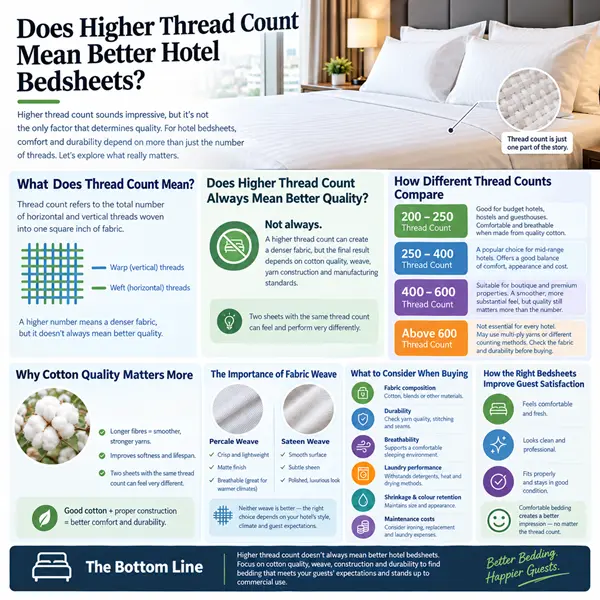
Thread count refers to the total number of horizontal and vertical threads woven into one square inch of fabric. Horizontal threads are called weft threads, while vertical threads are known as warp threads. The combined number represents the fabric's thread count.
For example, a bedsheet labeled as 300 thread count generally contains 300 threads per square inch. A sheet with a 500 thread count has a higher number of threads within the same area.
This measurement is commonly used when comparing bedding products. However, it does not independently determine whether a bedsheet is comfortable, breathable, or durable. The quality and thickness of the yarns, along with the manufacturing process, can make a considerable difference.
For commercial hospitality businesses, understanding thread count is particularly important because hotel bedding must withstand frequent use and repeated laundering.
Does Higher Thread Count Always Mean Better Quality?
The simple answer is no. A higher thread count does not automatically indicate superior bedding.
Although increasing thread count can create a denser fabric, the final result depends on the quality of the fibres and how the material is manufactured. A well-made cotton bedsheet with a moderate thread count can feel softer and perform better than a poorly constructed sheet with a much higher number.
Some manufacturers also use multi-ply yarns or different counting methods when advertising thread count. This can make product comparisons difficult because two sheets with similar advertised numbers may have different constructions.
Hotels should therefore look beyond product labels and evaluate the actual fabric. Examining samples, checking material specifications, and testing laundry performance can provide a more accurate understanding of quality.
How Different Thread Counts Compare
Choosing the right thread count depends on the hotel's budget, guest expectations, and operational requirements. The following ranges can help hospitality buyers understand their options.
200 to 250 Thread Count
Bedsheets in this range can be suitable for budget hotels, hostels, guesthouses, and accommodation providers looking for practical bedding solutions.
When manufactured using good-quality cotton, these sheets can provide a comfortable and breathable sleeping surface. They may also be a sensible option for properties that prioritize affordability and straightforward maintenance.
250 to 400 Thread Count
This range is a popular starting point for hotels seeking a balance between comfort, appearance, and cost.
Well-constructed cotton bedsheets in this category can offer a smooth texture without requiring the higher investment associated with some premium products. Mid-range hotels and serviced apartments may find this range suitable for their everyday bedding requirements.
400 to 600 Thread Count
Higher-thread-count bedsheets may appeal to boutique hotels and premium accommodation providers that prefer a smoother, more substantial fabric feel.
However, the cotton quality and weave still matter. A 500 thread count sheet is not necessarily better than a well-made 300 thread count alternative.
Above 600 Thread Count
Very high thread counts are not essential for every hotel. Some products achieve these numbers through multi-ply yarn construction or particular counting methods.
Before purchasing expensive bedding, hotel managers should evaluate the fabric's softness, breathability, construction, and durability rather than relying entirely on the advertised number.
Why Cotton Quality Matters More Than Thread Count
The type of cotton used in bedsheets can significantly influence their comfort and lifespan. Cotton fibres vary in length, strength, and quality, which affects the yarn produced during manufacturing.
Longer cotton fibres can generally be spun into smoother and stronger yarns. This can contribute to a softer fabric and improved resistance to wear when the sheet is properly manufactured.
Hotels should request clear information about fibre composition and fabric construction before placing bulk orders. They should also compare the actual feel of different products because two bedsheets with identical thread counts may offer noticeably different sleeping experiences.
For commercial use, strong yarn construction is particularly important because sheets are exposed to regular handling, washing, drying, and ironing.
The Importance of Fabric Weave
Fabric weave is another factor that influences how hotel bedsheets feel and perform. Two common options in the hospitality industry are percale and sateen.
Percale Weave
Percale generally has a crisp, lightweight texture and a matte appearance. Its breathable construction makes it a popular option for hotels that prefer fresh-feeling bedding. It can be particularly appealing in warmer environments.
Sateen Weave
Sateen typically has a smoother surface and a subtle sheen. It offers a different texture from percale and may suit hotels looking for a more polished or luxurious bedding presentation.
Neither weave is automatically superior. The right choice depends on the hotel's preferred appearance, guest expectations, climate, and maintenance requirements.
What Should Hotels Consider When Buying Bedsheets?
Rather than selecting bedding based on thread count alone, hotel purchasing teams should evaluate several practical factors.
-
Fabric composition: Check whether the bedsheets are made from cotton, polyester blends, or other materials.
-
Durability: Examine yarn quality, stitching, seams, and resistance to everyday wear.
-
Breathability: Choose fabrics that support a comfortable sleeping environment.
-
Laundry performance: Confirm that the sheets can withstand the hotel's washing temperatures, detergents, and drying methods.
-
Shrinkage and colour retention: Look for materials that maintain their dimensions and appearance after repeated washing.
-
Maintenance costs: Consider ironing requirements, replacement frequency, and overall laundry expenses.
Requesting samples before making a large purchase is a practical way to compare different bedding options. Hotels can wash the samples several times and evaluate changes in texture, dimensions, and appearance.
How the Right Bedsheets Improve Guest Satisfaction
Comfortable bedding contributes to the overall impression guests develop of a hotel. While thread count may influence the feel of a sheet, guests also notice cleanliness, freshness, proper fitting, and the condition of the fabric.
Bedsheets that feel pleasant, look professionally presented, and remain in good condition can support a positive sleeping experience. On the other hand, faded colours, visible stains, rough textures, and damaged seams can create a negative impression regardless of the advertised thread count.
Hotels should combine suitable bedding choices with consistent housekeeping and laundry standards. This approach helps maintain the quality of guest rooms while supporting a reliable accommodation experience.
Final Thoughts
Higher thread count does not always mean better hotel bedsheets. Although it can influence fabric density and texture, the overall quality depends on several factors, including cotton fibre quality, weave, yarn construction, finishing, and durability.
For many hospitality businesses, a thread count between 200 and 400 is a practical starting point. Premium properties may explore higher counts when the fabric offers meaningful improvements in comfort and performance.
Ultimately, hotel owners should focus on selecting bedsheets that meet their guests' expectations and withstand the demands of commercial use. Comparing fabric samples, checking supplier specifications, and testing laundry performance can help businesses make better purchasing decisions and achieve long-term value.

 Հայերեն
 English
 French
 Deutsch
 Greek